Whose responsibility is it to teach digital and media literacy skills? What issues and challenges do they face?
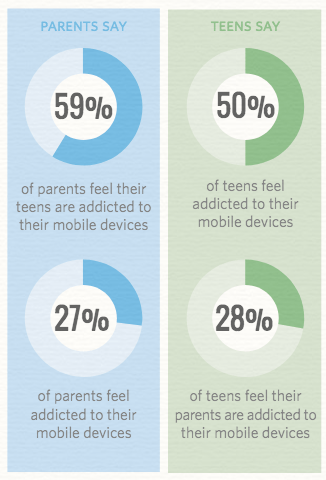
Many of us interact with digital media from the time we wake up to the time we fall asleep. Our phones are glued to our hands as we socialize, educate or entertain ourselves, and idly while away the hours when we should be doing more productive tasks. Students are just as bad, if not worse, than we are when it comes to monitoring media usage. Nonprofit group Common Sense Media reports that 59% of parents feel their teens are addicted to their mobile devices while 28% of teens feel their parents are addicted to their mobile devices (Felt & Robb, 2016, p. 2).
With so many of us seemingly attached to our devices, we go through an enormous array of digital media of wavering credibility each day. How often do we pause to think critically about what we are seeing (consuming, believing)? How often do we explicitly ask our students or children to think critically about the movies they watch, memes they spread, video games they play, or infographics they see?
In the US, teachers are largely tasked with educating students about digital and media literacy, but parents should also assume the responsibility by encouraging inquiry in all facets of life, including media. While teaching digital and media literacy is a noble goal for teachers and parents alike, oftentimes we fail short because of time or budget constraints, lack of knowledge, persistence, or care.
Teachers who teach outside of the United States or who teach many nonnative students in the United States may have increased pressure to educate students about digital and media literacy as it may not be included in the local past curriculum, students may have limited access to digital media in comparison to their American peers, parents may not assume this responsibility in the home, and the local government may not encourage inquiry about digital media, especially media produced by the state.
As a teacher who teaches in a transnational high school preparing students to study abroad in an American university, I find it especially important to teach my students digital and media literacy. Up until they enter the international division of our high school in the tenth grade, they were rarely asked to think critically about digital media or to consider their sources for academic work. Just like how citing their sources is a foreign concept to them, so too is thinking critically about digital media.
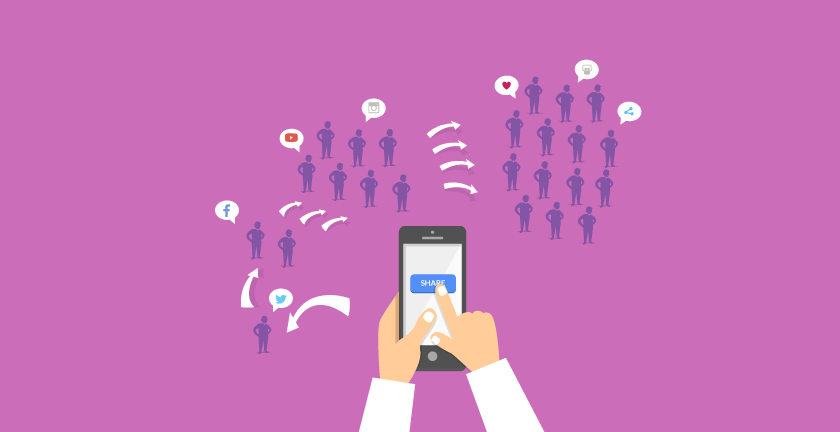
The National Association for Media Literacy Education (NAMLE) puts it simply: “The purpose of media literacy education is to help individuals of all ages to develop the habits of inquiry and skills of expression that they need to be critical thinkers, effective communicators, and active citizens in today’s world” (Scheibe & Rogow, 2011, p. 36).
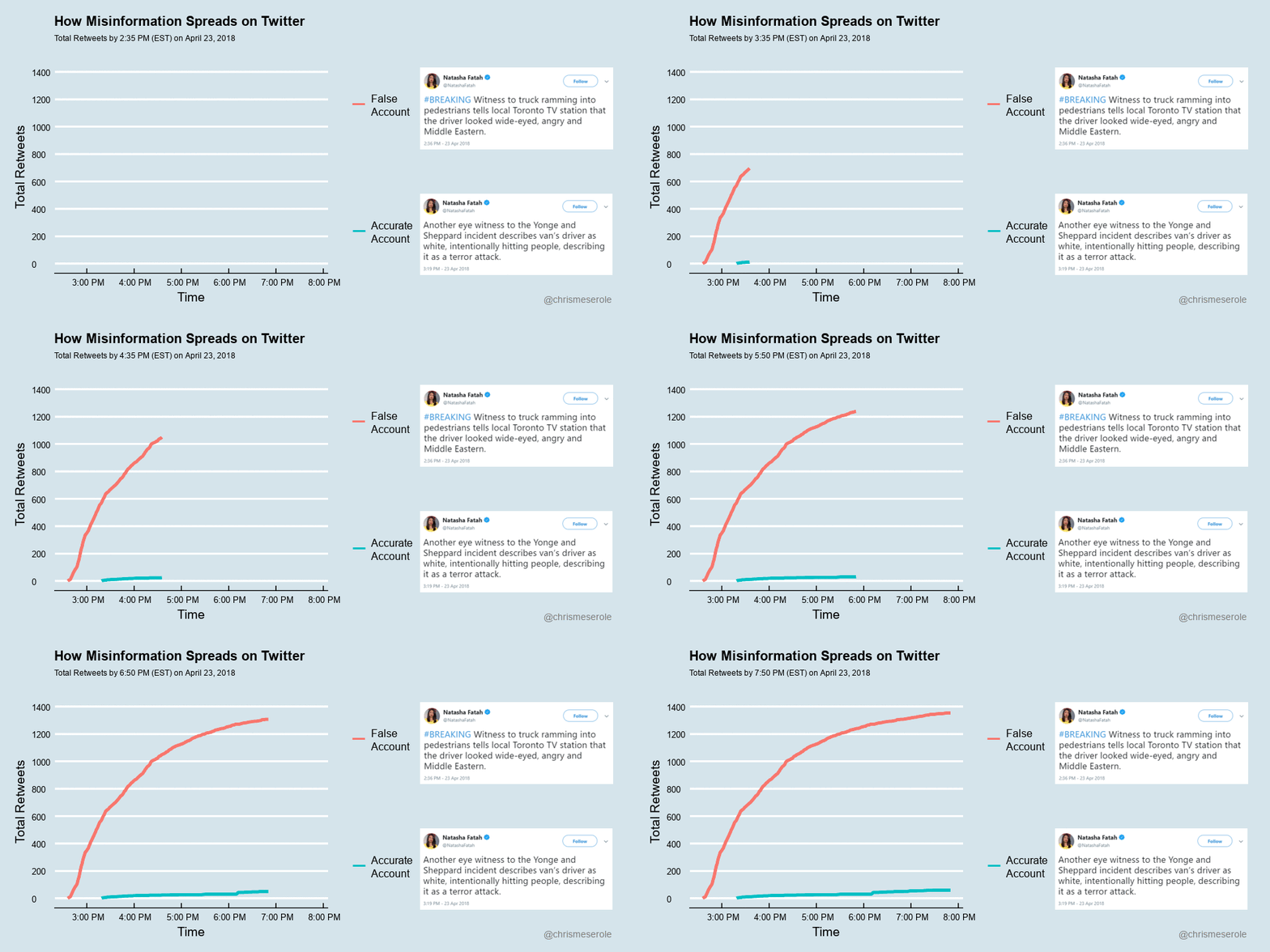
Learning how to read a map or infographic can help our students score higher on standardized tests (Baker, 2017), learning how to think critically about memes and pictures shared on social media can help our students curb the spread of misinformation (Hyman, 2019), and learning to be more discerning about any media that crosses their path can help our students become “self-directed lifelong learners, capable of addressing any subject” (Jolls & Wilson, 2014, p. 65).
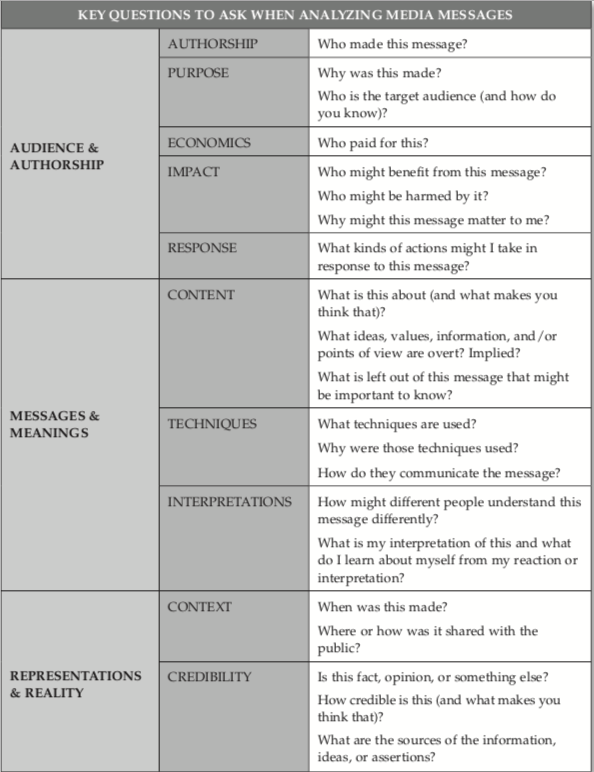
Teaching in China adds a layer of complication to teaching digital and media literacy. Where do you draw the line? You want to prepare your students to think critically about media and other traditional sources so that they can succeed in foreign university if they choose that path, but you also want to ensure their safety (and yours) while they are still in China. For those teaching international students in a higher education environment, how do you make accommodations for your students who may be unaccustomed to working with or thinking about digital media? Is NAMLE’s framework (show below) enough?
References
Baker, F. (2017). Media literacy: How to close read infographics. Middle Web. Retrieved from https://www.middleweb.com/34963/media-literacy-how-to-close-read-infographics/
Felt, L., & Robb, M. (2016). Executive summary May 2016: Technology addiction: Concern, controversy, and finding balance [PDF file]. Retrieved from https://www.commonsensemedia.org/sites/default/files/uploads/research/2016_csm_technology_addiction_executive_summary.pdf
Hyman, I. (2019). Can we stop the spread of misinformation? Psychology Today. Retrieved from https://www.psychologytoday.com/us/blog/mental-mishaps/201907/can-we-stop-the-spread-misinformation
Jolls, T., & Wilson, C. (2014). “The core concepts: Fundamental to media literacy yesterday, today and tomorrow,” Journal of Media Literacy Education, 6(2), 68 -78. Retrieved from http://digitalcommons.uri.edu/jmle/vol6/iss2/6
Scheibe, C. L., & Rogow, F. (2011). The teacher’s guide to media literacy: Critical thinking in a multimedia world. Retrieved from http://ebookcentral.proquest.com/lib/northeastern-ebooks/detail.action?docID=1104599.
 Intentionally International